IrpiMedia è un periodico indipendente di giornalismo di inchiesta.
Scriviamo inchieste basate sui fatti e in profondità.
Aiutaci a garantire un’informazione libera e di pubblico interesse.
Since the 1980s, a group of Calabrian entrepreneurs have been living in Luxembourg. Their sons now own pubs and restaurants. However, according to an investigation by the anti-Mafia prosecutor’s office, however, they are linked to a cosca from a small town in Calabria
On July 25th, Malea, the ancient Greek name of Mammola, a small village perched on the outskirts of Siderno, became the code name of an investigation by the Mobile Squad of Reggio Calabria, coordinated by the district anti-Mafia prosecutor’s office. Nineteen people were arrested at dawn, on charges of belonging to a ‘Ndrangheta locale.
This was the first time that a judicial investigation had recorded and acknowledged, albeit at a preliminary stage, the existence of a ‘Ndrangheta locale operating in the town, known in the past for its stocco festival and its patron Saint Nicodemus, and now for its ‘Ndrangheta groups, operating both in the Ionian Sea and abroad, in the Grand Duchy of Luxembourg.
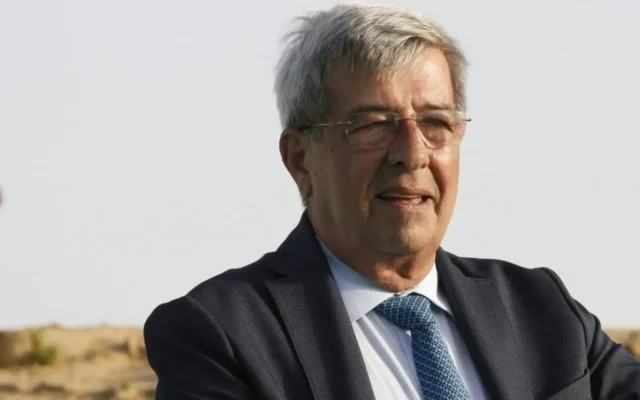
It was there, according to the investigation, that the ‘Ndrangheta of Mammola had set up an operating unit twenty years ago, led by Nicodemo Fiorenzi. Born in 1960, Fiorenzi is officially an employee of the Mammola forestry department, but is actually a permanent resident of Luxembourg. There, he acts as a representative and expat manager for the Mammola locale, tasked with «managing all the investments, legitimate as well as illicit, made by Mammola residents in the country», reads the custody order. In his day-to-day business, he manages the unit independently, but he must inform the top management of the ‘ndrina in Mammola on any relevant matter, receiving orders and instructions.
In Breve
On Tuesday July 25hth, “Malea” (the ancient Greek name of Mammola, a village on the Ionian coast of Calabria) became the code name of an investigation by the Reggio Calabria Mobile Squad, coordinated by the district anti-Mafia prosecutor’s office. Nineteen people were arrested at dawn, on charges of belonging to a ‘Ndrangheta locale
This is the first time that a judicial investigation (albeit a preliminary one) has acknowledged the existence of a ‘Ndrangheta locale in Mammola
The locale is headed by Rodolfo Scali, but it has a detachment in Luxembourg, led by Nicodemo Fiorenzi
Among those arrested in Luxembourg was Nicodemo Callà, a Mammolese restaurant owner who had arrived in Luxembourg in the 1980s following a feud
Operation Malea also traced the movements of several young Mammolese expats in Luxembourg, including Salvatore Scali, son of boss Rodolfo, who was arrested on charges of Mafia association
Through OpenLux, in 2021, IrpiMedia reported how the ‘Ndrangheta groups from Mammola and Siderno had established a stronghold in southern Luxembourg, mapping over twenty families. Operation Malea confirms what was only a suggestion two years ago
Until now, the ‘Ndrangheta in Mammola had only been documented in an «incidental and episodic manner» by judicial investigations, the examining magistrate wrote in the order, despite some of its members having been arrested in important investigations such as Crimine-Infinito (2010) and Minotauro (2011).
In 2021, as part of the OpenLux project, IrpiMedia documented the presence in Luxembourg of various individuals linked to the ‘Ndrangheta in Mammola and Siderno, but it had been impossible to determine whether the Scali, the dominant ‘ndrina in Mammola, also commanded a cell in Luxembourg, or whether their presence was a coincidence. A previous investigation, “Canadian Connection 2”, had shown how Santo Rumbo, the son of an important Siderno boss, had settled in Luxembourg. IrpiMedia’s research had shown how the catering business opened by Rumbo in Luxembourg had then passed into the hands of young men from Mammola, whom the Malea investigation confirms were also «sons of the family». Thanks to blood ties, there exists, in short, a continuity of the Mafia groups between Mammola and Luxembourg, branching out among members of twenty families surveyed by OpenLux, nine of which were targeted by the Malea operation.
Rise of a boss
The first intimation that Rodolfo Scali was the local boss of Mammola emerged during the Crimine-Infinito investigation, for which Scali was convicted in 2010, followed by the Turin prosecutor’s Operation Minotauro. Scali was described in the investigation as being responsible for the allocation of doti, (or dowries – the “positions” within the “board of directors” of “’Ndrangheta Inc.’) in the Cuorgnè, Piedmont locale. Scali, who has been at large since 2016, was portrayed in the Crimine-Infinito investigation as a heavyweight boss, one of the few who had the trust of Giuseppe Commisso (also known as “U Mastru”), then head of the eponymous ‘ndrina in Siderno and the entire province. Operation Malea started from the very moment Scali as released from prison, documenting a real rise to power. Scali emerges not only as «a simple “member of the secessionist cosca” – as he was described in the files of 2000’s operation Prima Luce – but [as] a man who had strengthened his role within the ‘Ndrangheta of the Ionian district, compared to what had already emerged in the well-known ‘Crimine’ and ‘Minotauro’ investigations», the prosecutors wrote.
Malea outlines the hierarchy of the entire club, with Rodolfo as the boss, assisted by Damiano Abbate as the capo-società and Nicodemo Deciso as maestro di giornata, effectively acting as a link between the bosses and the rest of the locale.
By wiretapping Rodolfo Scali, his son Salvatore Scali, Damiano Abbate, and their conversations with other important members of the group, it was «possible to obtain a true and faithful picture of the existence, functioning, and internal dynamics of the group itself» and to determine the roles of each member.
The investigations began in mid-2016 and found Mafia infiltration in the Mammolese community, with the ‘Ndrangheta controlling businesses and activities in the forestry sector via the extortion method, the production and trafficking of drugs, going so far as demanding protection money and controlling the operations during the festivities in honour of Saint Nicodemus.
Boss Rodolfo Scali, by now the true leader of the Mammolese Mafia organisation, valued his job as manager of the anti-State: «See how nothing happens here; not a theft, nothing happens, do you know how we’re keeping this town? Like a jewel! …And they arrest us anyway! …I had the bar with the pastry shop, and I didn’t have to close it», he said in a wiretapped conversation.
According to Operation Malea, the boss’s right-hand man is his son Salvatore, for whom Rodolfo has always had a soft spot. According to a pentito [former mobster turned informant], it was to keep him safe from investigations, that he had ‘sent him to Luxembourg’. As IrpiMedia has already reported with OpenLux, Salvatore Scali had a restaurant, called Romeo & Giulietta, in Differdange, a Luxembourg town on the border with France. Operation Malea clarified how Salvatore had been persuaded by his father not to invest in business activities in Turin and to emigrate to Luxembourg, where he could move with impunity, without risking arrest.
An armed Mafia
According to the findings of Operation Malea, the Mammolese cosca had several weapons at its disposal. In November 2017, boss Scali also suggested that one of his henchmen based in Luxembourg buy more, and store them in a warehouse for use by the ‘ndrina.
Scali was obsessed with weapons. He used them to intimidate, to collect extortion money and to maintain control over the territory. He owned several, including rifles for hunting wild boar, despite a restraining order that prevented him from owning pistols and rifles. In wiretapped telephone calls he tells of his particularly gruesome, illegal hunting trips, in which he was joined by Salvatore. This was also confirmed on his now-deleted Facebook profile, where Scali junior posed in camouflage next to the bodies of six wild boars.
It is unclear where the Scali kept their weapons, either for hunting or for the clan’s other operations. According to statements made by the pentito Antonio Ciccia in 2015, the Mammolese ‘Ndrangheta had a hideout in Piedmont (run by the local branch of the Cuorgnè locale), but other weapons from Luxembourg were destined for Mammola. The weapons were to be de-registered and transported in the truck of Nicodemo Deciso, whom the investigators indicate as the mastro di giornata for the Mammola locale. At the time, the man was employed by the Mammola-based Autotrasporti Sità. Another pentito, Nicodemo Ciccia, recounted this to the prosecutors in May 2021, recalling that «he used to do transport and sometimes stopped in Cuorgnè; I know he also travelled abroad, to Luxembourg, where there are other individuals from Mammola».
IrpiMedia also discovered the presence in Luxembourg of a young Sità, the owner of the transport firm where Deciso (who was in turn married to a Sità) worked. – The man was also linked to Deciso by having worked at his bar in Mammola, Caffè Deciso. The young Sità also managed a company in Luxembourg, Mammola sarl, which operated a pizza restaurant – Delizia – and a pastry shop – La Dolce Vita – both in Differdange. Both businesses closed after a few years, consistently with all the others analysed during the OpenLux investigation.
Something else that stands out is how Delizia was opened at the same address, rue Adolphe Kneps 29, where the Romeo & Giulietta restaurant, owned by Salvatore Scali, used to be. Today, a Sidernese-owned real estate firm can be found at this address, proving that the place has been changing hands among the expats of the Sidernese Ionian region.
The Malea investigation also arrested Nicodemo Callà, known nas Bomba, born in 1963, who operated and invested in Luxembourg for years, undisturbed. According to the investigators’ reconstruction, Callà is a brother-in-law of Nicodemo Fiorenzi, head of the Mammolese branch in Luxembourg, helping him liaise between the Mammolese back home and the expats in Luxembourg. According to the accounts of pentito Antonio Ciccia, the ‘Ndrangheta presence in Luxembourg began with Callà, after he was forced to leave Calabria during a feud in the 1980s.
According to the pentito, Callà went to «settle in Luxembourg […] many years ago, following the murder of Isidoro Macrì [another local boss, with ties to the Sidernesi], which took place in Mammola in the 1980s. After the murder, to escape the revenge of the Macrì, Callà he had been sent away under orders from the local boss in Mammola, who wished to avoid a bloody feud. In addition to Nicodemo Callà, Isidoro’s brother Salvatore Macrì, was also sent away.
Company records show that Callà still owns the real estate firm I Tre Ghiottoni, registered in 2004 as a société civile, which does not require the filing of balance sheets. Callà joined the board in 2006, and early in 2022 became the owner of all shares in the company, together with his three sons and his wife, a Sità.
The former partner also owned the Bomba Grill restaurant in Differdange, possibly after Callà’s nickname, Bomba. From photos found on Facebook, the décor was reminiscent of the style seen in Mafia series and films, such as Scarface and The Godfather. The restaurant, which has since changed ownership, is now called Bellissimo, and run by a company owned by a young man from Mammola. The man was mentioned in the Malea investigation, as he is the brother-in-law of the presumed head of the Mammola unit, Damiano Abbate. According to the investigators, he was also involved in extortion against the managers of the Mammola amusement rides during the festival of Saint Nicodemus. The catering business was started by Abbate’s brother-in-law with another associate mentioned in operation Malea, who, according to the pentito Domenico Agresta, sold drugs to the Scali.
The Malea investigation, however, only touches on some of the individuals and companies mapped by OpenLux: the impression is that it is mostly the new generations that continue the family business in Luxembourg, receiving their fathers’ funds and laundering them in one of the world’s most notorious tax havens. Damiano Abbate made this clear to Rodolfo Scali: «What if we did something [in Luxembourg]? My brother-in-law and I want to invest 50,000 euro, 100,000 euro, there where you are, where your children are, so they can manage them; see if they’ll come and take that». In other words, the Italian authorities will never be able to track our investments in Luxembourg. Turns out, Abbate and Scali might have been onto something.
Hai informazioni su questa storia o su altri casi di abuso di potere?
Puoi inviarci documenti e segnalazioni in modo completamente sicuro e anonimo.
Riviera Zazueta è stato arrestato: assicurava la logistica per il cartello di Sinaloa all’aeroporto di Città del Messico. Era anche ricercato dalle autorità di Catania per traffico di cocaina, tra i clienti anche la ‘ndrangheta
Oggi in Italia la violenza mafiosa è silenziosa: viene utilizzata come strumento per regolare il commercio al dettaglio e le faide interne ai clan. In Europa, invece, cresce e si sposta anche verso i centri più piccoli
Il conflitto civile in Colombia finisce ufficialmente nel 2016, con la smobilitazione dei guerriglieri comunisti delle FARC. Il vuoto di potere nelle aree rurali viene riempito dai narcos, che espandono le loro operazioni verso l’Ecuador
Le spese dell’agenzia europea per le frontiere in questo campo sono in crescita vertiginosa. Sono cruciali per consentire le intercettazioni dei migranti da parte della guardia costiera libica. E potrebbero aumentare ancora
Israele finanziava la promozione sul motore di ricerca di una finta versione del documentario Naza. Su nostra segnalazione, Google ha dovuto riconoscere la violazione delle proprie regole
Il ruolo del cooperante delle Nazioni Unite, trovato morto nel 2020, è spesso stato derubricato a lavoro d’ufficio. In realtà, è stato decisivo per fare da tramite fra lo Stato colombiano e gli ex guerriglieri
Dal 1982 la "direttiva Seveso" serve a prevenire gli incidenti industriali. In Italia gli impianti sono circa un migliaio. Crisi climatica e transizione energetica sono le nuove sfide, ma servono risorse adeguate