IrpiMedia è un periodico indipendente di giornalismo di inchiesta.
Scriviamo inchieste basate sui fatti e in profondità.
Aiutaci a garantire un’informazione libera e di pubblico interesse.
The 2019 arson attacks in Rome's Centocelle district revealed the infiltration of businesses by organised crime. Four years on, we try to shed light on its methods and numbers
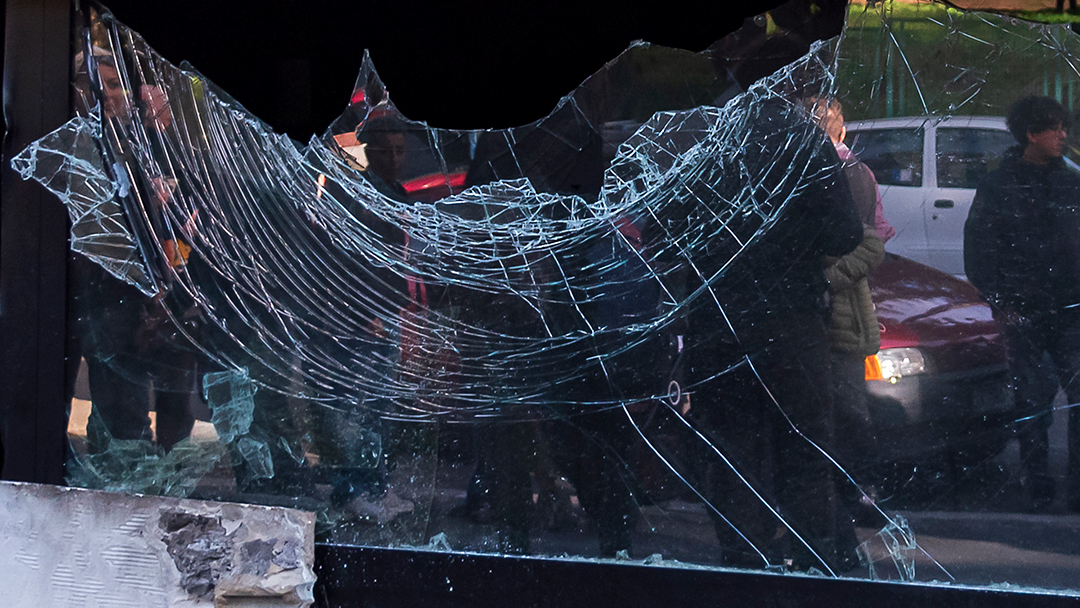
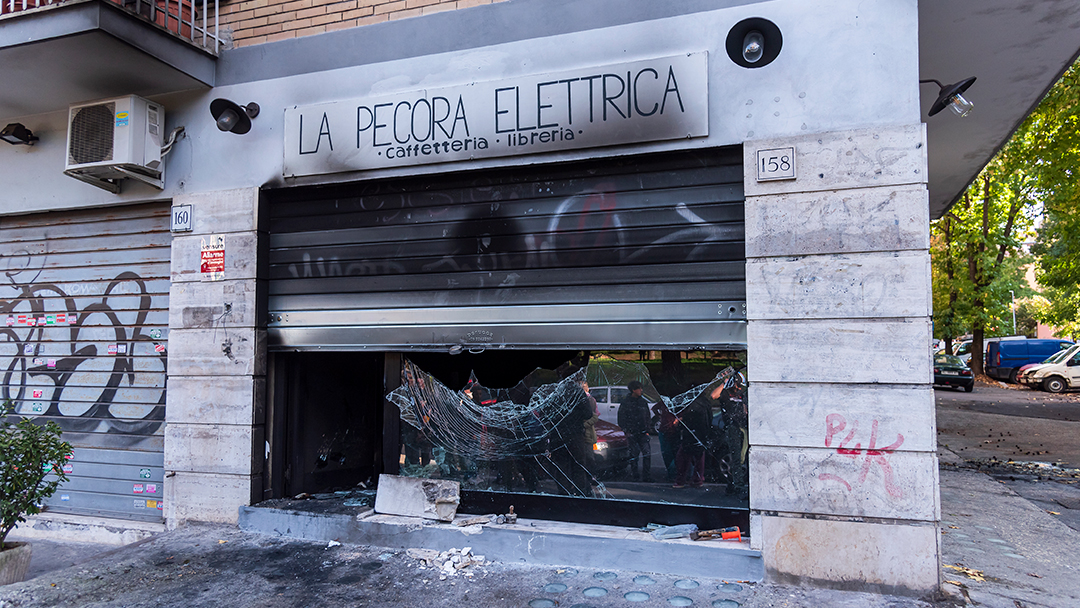
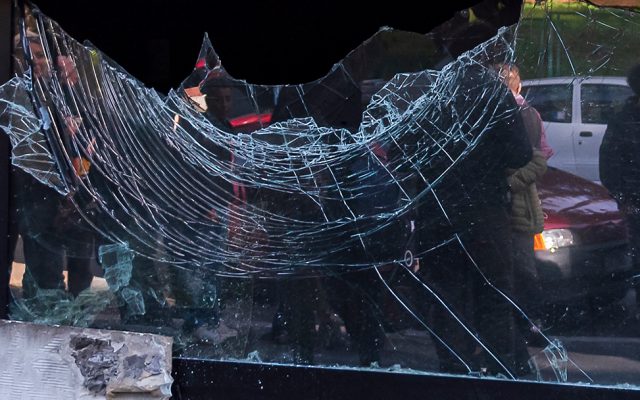
The sound of an explosion, tearing the silence of the night. In the early hours of April 25th 2019, a bomb went off outside the door of La Pecora Elettrica, a popular bookstore in Centocelle, a neighbourhood in the eastern quadrant of the capital. On 158 Via delle Palme, at number 158, residents of the neighbourhood started to gather while the forensic team carried out the first inspection. The act was one of inexplicable violence to Danilo and Alessandra, the owners of the bookstore, who stated they had not received any demands for protection money, nor had they ever quarrelled with anyone in the area.
At first, since the attack had occurred on Italy’s Liberation Day, the investigators did not rule out a politically motivated attack. This, however, proved to be a dead end: no one claimed responsibility for the attack, and no one appeared on the list of suspects.
In Breve
Since 2019, a series of arson attacks have hit the neighbourhood of Centocelle in Rome, with a clear intent to intimidate business owners as well as residents, revealing the interests of organised crime in the area
Since 2015, with the opening of a new underground line, the neighbourhood has begun a process of gentrification that has also made it more attractive for criminal investments
Many establishments in the area are in the hands of organised crime groups, who use them for money laundering or as distribution points
IrpiMedia’s analysis shows at least that around 10% of the businesses surveyed have some kind of connection with organised crime
Thanks to several sources and witnesses, we have analysed the presence of organised crime in a neighbourhood that has responded by mobilising to fight back
The most popular theory among residents is that someone wanted to shut down the pinseria Cento55 and La Pecora Elettrica, the only establishments in the area to stay open after 8pm on a street where, according to residents, a kind of curfew is in place in the evenings.
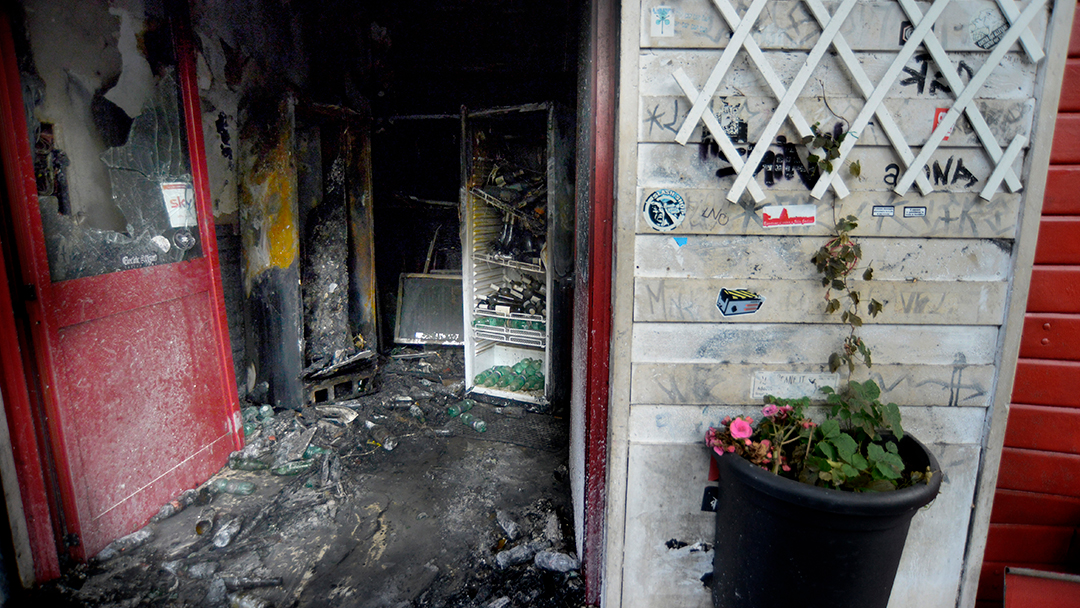
The arson attacks, however, did not stop there. On the night of November 5th, two days before the expected reopening, La Pecora Elettrica was burned down again, six months after the first hit. It was a heavy, unexpected blow for the entire community who had rallied around the owners, and had participated in a successful crowdfunding campaign to revive the bookstore.
This time, the Centocelle residents were joined by the president of the 5th Municipality, Giovanni Boccuzzi in decrying the incident, as well as some national newspapers. The residents took to the streets to protest against the indifference of political institutions. A few days later, the nearby Baraka Bistrot pub was also burned down during the night, using the same MO. Its owner had publicly voiced his solidarity with the managers of La Pecora Elettrica.
After the first two attacks, theories about the culprits pointed mostly at the park drug dealers, but the matter now appeared more serious. Some citizens believed racketeering was somehow involved. Centocelle has recently become a new outpost of the capital’s nightlife: thanks to the opening of a new underground line, there has been an influx of young people and clubs, which might end up in the crosshairs of organised crime.
Voices from the neighbourhood
Francesca [her name has been changed to protect her identity], a frequent customer at La Pecora Elettrica, was at the bookstore the evening before the fire: «The evening of April 24th was unsettling. After they closed, it was very quiet, we were outside. They burnt the P.E. half an hour after they had closed, almost as though they had been following their movements and watching the employees. The second fire was very violent; they threw a stolen scooter inside and set it on fire with petrol».
By early November 2019, La Pecora was ready to reopen, thanks in part to the fundraising a campaign: the second arson attack wrecked it again, and another business was also hit: «A few days later they burned the Baraka, even though the area was heavily patrolled by the police and the bar next door was open 24/7», Francesca recounted. Both the first and the subsequent attacks sparked a wave of outrage and an unprecedented mobilisation, with protesters chanting “Fight the fear, defend the neighbourhood”. «It was a mockery, a power move… as if to say that even after all the protests, they didn’t give a f—», Francesca concluded.
Arson seemed to be the preferred mode of attack in the neighbourhood, and it continued into 2020. In February, the flames damaged the door of the Exodus Pub, an establishment that has been open on Via dei Ciclamini since 1996. Then, on the night of June 10th, the Haka Sport Italy gym was set on fire by breaking one of the ground floor windows and throwing flammable liquid inside.
After the yet another attack, a “self-defence walk” took place in the neighbourhood in solidarity with Marco and Romina, the owners of the Haka gym. It was organised by LAC (Libera Assemblea di Centocelle), founded during a public assembly held immediately after the attack against the Baraka. It is a spontaneous coordination group that brings together self-managed community centres, residents and neighbourhood associations. The need for this type of grassroots response was keenly felt, especially after the second wave of arson attacks. Faced with the indifference of the local government, which has been unable to tackle the problem except by exponentially (albeit sporadically) increasing police checks for a few months, the neighbourhood has tried to create a more lasting alternative. Founded in 2019, LAC sought a response to the criminal emergency in the active mobilisation of citizens, by taking care of the neighbourhood, through the distribution of food for the most vulnerable, and self-defence walks.
The June 2020 event was, among other things, a rally against political inaction. The owners of the Haka gym said they felt abandoned by the institutions.
Marco and Romina claimed that they had received no extortion demands, but confided in others who had in turn suffered attacks of various kinds. In 2020, they met the former manager of another business who had been forced to sell to the ‘Ndrangheta, and they learned of other establishments that had turned into money-laundering spots for criminal groups.
Another source, a shop owner in the neighbourhood, told IrpiMedia that on several occasions, people of Italian nationality had walked into her store demanding to make her bathroom available for drug dealing, or asking to buy the premises. Refusing to be intimidated, the woman had sent them away, but reprisals soon followed: the lock on the shutter was stolen, a gazebo and a fence were destroyed, and electricity wires were cut (two days after the arson attack at the Baraka). She is convinced that many businesses in the neighbourhood have sprung up with the help of individuals who would ask for a place to deal drugs in return.
For years, the Parco delle Palme Committee has been taking care of the green area, and organising to involve children and the elderly. Its members have often spoken of feeling «like they’re being watched» during their meetings in the park, because «we were disturbing the drug dealers». After the first fire at La Pecora Elettrica, the committee members decided to put up a banner asking for playground equipment for the children in the park. That same night, the banner was destroyed, along with fifteen fences installed by workers who were fixing the lighting system.
Following that, the intimidation campaign became more intense, until a member of the committee had his car burnt. Feeling helpless, the victim chose to leave Rome, while the committee self-suspended, denouncing a delay in the investigation and the fact that even the latest mayoral election campaign did not address the issue of crime.
Several newly-opened establishments are also said to be linked to drug trafficking: a source told IrpiMedia how criminal organisations “facilitate” the opening of businesses by providing the necessary capital. This serves a variety of purposes: to gain the loyalty of those who have been “helped”, keeping them under the constant influence of the organisation; to have a place where money can be laundered and, in the case of a nightlife venue, where drugs can be dealt. «In a way, this is also a form of protection money», the source claimed.
In addition to money laundering and trafficking, according to our source, there is a deeper, cultural motivation: «There is a Mafioso bourgeoisie in our society, the white-collar workers who willingly facilitate the Mafias, and then there is a grey area made of omerta, carelessness, sloppiness, and a reluctance to change the reality around us, which is actually more dangerous, even without the willingness.» People are afraid, they think that the Mafias are still looking to assert their power through violent acts, when in fact «they need you alive more than they need you dead, because when they do something to you, it makes more noise», our source concluded bitterly.
Criminal infiltration
«The fires may be the result of an attempt by a criminal organisation to take control of the area», says Ilaria Meli, adjunct professor of international strategies for combating organised crime at the Statale University of Milan, «and right now, the resurgence of tensions in the eastern areas of Torpignattara and Centocelle is a sign that organised criminal groups need to restore the balance that was lost with the major busts of the past few years, and re-establish control of drug-dealing spots».
As early as 2017, two investigations by the district anti-Mafia prosecutor (DDA), called Babylon 1 and 2, had tackled the issue of Mafia infiltration in Roman clubs, with 46 businesses seized in central Rome that had belonged to Camorra clans and to groups affiliated to the ‘Ndrangheta. The common tactic was to use the proceeds of illegal activities to buy premises located in highly profitable neighbourhoods (such as Rome’s nightlife areas), where money could then be laundered without arousing too much suspicion.
To the east of the capital, one of the most pervasive groups, especially in the Tor Bella Monaca area, is the Casamonica family, which has gained control over the territory through intimidation tactics and brute violence. However, «even though the Casamonicas are a major player in Roman organised crime, if we are talking about those who control the biggest illicit funds in Rome, then we are talking about the Camorra and ‘Ndrangheta», Meli continues. The latest investigations by the DDA in October 2022 shed light on some of the goings-on in the east of the capital, unveiling a ‘Ndrangheta locale led by the Alvaro-Carzo families that operated mainly along Via Tuscolana. One of the main differences between the Roman mafia groups and those of the Camorra and ‘Ndrangheta is that «the Roman groups are small, so when you take out the leader, they are weakened. The ‘Ndrangheta is another matter».
In this context, Centocelle represents an area of great interest for organised crime, especially since the opening of the new C underground line, with three stations in the neighbourhood alone. Since 2015, there has been an exponential increase in the number of businesses, and a corresponding greater interest from Mafia organisations in getting a foothold. In such a context, the criminal economy is ready to invest in the neighbourhoods and satisfy the demand for drugs. Several witnesses in Centocelle spoke of businesses that were constantly changing hands, even in the aftermath of the Covid-19 pandemic, not exactly an ideal time for investments. In addition, those familiar with the streets of Centocelle spoke of systematic drug dealing inside some of the establishments in the neighbourhood’s nightlife hotspots. This is when IrpiMedia, with support from the Transcrime research institute, decided to carry out an analysis of the commercial establishments in the area, in an attempt to map the infiltration of organised crime.
Figures and inner workings of crime in Centocelle
The analysis that we are describing represents the results of 14 months of research (conducted with a methodology that will be explained below) and has allowed us to identify many of the businesses involved. However, IrpiMedia cannot assume the role of the authorities in verifying the data collected by analysing bank transactions and other confidential information. Therefore, the analysis in itself cannot be regarded as conclusive evidence. Given the lack of official investigations, we have chosen not to name the establishments that were identified.
For this analysis, we collected data on 255 businesses located in the Centocelle-Alessandrino area. Using news items, court filings and reports collected among the neighbourhood’s residents, our initial list was gradually whittled down.
Starting with more than 100 cases of opaque business ownership (worthy of investigation by the authorities), we ended up with 22 businesses which employed, or had employed until recently, people who were suspected of belonging to the Mafia.
The companies ranged from food service to construction, and included car dealerships, sports facilities, hair salons and wellness centres. What unites them are the ties of kinship and affiliation between owners, and some of the the most notorious family names in the city’s organised crime: the Casamonicas and the Calìs, mostly “local” families who have long been operating in Rome’s eastern quadrant, as well as the Seneses and the Moccias, from Camorra groups that emigrated to the capital as early as the 1970s and 1980s.
Some establishments are simultaneously owned by individuals belonging to separate groups of the city’s criminal underworld, as in a joint venture. Others have changed hands, but within the same family: if the name of one of the owners ends up in an official investigation, the business in question is closed and in its place, at the same street number, another (often similar) shop opens, run by another member of the family.
Direct links to crime, however, were not the only selection criteria we used. Among the most notable red flags were companies that had registered empty plots of land between street numbers as their physical location addresses. Others that were listed as still in business in the official registers, were in fact abandoned shops with old, faded posters and shutters that had been closed for years. At the same time, businesses listed as closed are in fact open, with customers coming and going on a daily basis. As if both the establishments and the owners controlling them were treading a thin line between visible and invisible. Finally, out of 22 businesses, seven were found to have opened between 2020 and 2021: definitely not an ideal timeframe for new catering businesses or dealerships, given that the pandemic was still at its peak.
These include establishments that have been infiltrated by Mafia organisations (who do not leave a paper trail, but are involved in management of operations), as well as those registered to individuals affiliated with various criminal groups. At a conservative estimate, including only the most suspect cases, their combined revenue exceeds 4 million euro. As investigative sources confirmed to IrpiMedia, the ‘Ndrangheta and other Mafias can invest anywhere, depending on the available opportunities. They are adaptable, opportunistic, and ready to update their money-laundering methods.
Beyond the simple “invoicing” of dirty money, a basic money-laundering technique that is easy to use in any cash-based business (restaurants, bars, etc), there are several stratagems used by the Mafias to move money around. One of them involves shareholder financing – an injection of liquidity by third parties. This action is not illegal per se, but the tax returns of these “outside benefactors” often reveal that they do not have enough funds to justify the amount of the financing, which may indicate that the money came from illicit activities.
The increasing trend in recent years sees companies issuing invoices to other entities registered outside Italy, mainly Eastern Europe, where company details are likely to be even more opaque and lacking, while different tax laws make it even harder to track capital flows with accuracy.
Civic resistance and institutional indifference
This situation, except perhaps for its innermost workings, is obvious to anyone who lives in Centocelle. Residents have often lamented the indifference of the institutions towards the continued attacks. After the first fire at La Pecora Elettrica, no acts of solidarity came from municipal or regional institutions, nor any support from the authorities, according to residents. The victims of arson attacks were not interviewed by the police, and even the owners of the bookstore-cafe, a few days after the attempted re-opening, said that they had not heard anything about the ongoing investigation. Only after the second attack did the mayor, Virginia Raggi, visit the site, as did Nicola Zingaretti and Giuseppe Conte (then President of Lazio and Prime Minister, respectively).
The visit made for a great photo-op, which the media seized upon, but no actual support was given to solve crime in the neighbourhood.
Civic resistance is still very much the only form of opposition to criminal infiltration in East Rome. «The situation for the residents is very serious», said a member of LAC at the end of 2021. «Other businesses have been threatened, but it is not clear by whom». In this context, LAC has gathered around issues such as self-defence, mutualism, education and the environment in a collective attempt to help each other as neighbours in Centocelle. The so-called “recovery walks” were the first events organised in a spirit of unity and resilience. The movement that emerged has been acting as a social force, creating bonds and mutual support between the disparate groups in the area.
As the owners of La Pecora Elettrica were not inclined to reopen, following negotiations between LAC and the regional government of Lazio, the former bookstore was kept available to the residents of Centocelle. The result was Cento Incroci: a cultural space with a library that doubles as a reading room, a place of study and work, and where courses for children, debates, conferences can be organised. It is an attempt to recreate the social role that La Pecora Elettrica once played in the neighbourhood.
The grassroots movements in Centocelle, Quarticciolo and Torre Spaccata have built a successful network of solidarity around a neighbourhood affected by the events of 2019-2020, supporting the creation of new spaces for the community. These include a project for a public clinic in east Rome, as well as efforts by environmentalists to protect the city’s green areas. Last year, on December 18th, a party was thrown in the park on Via delle Palme, next to where La Pecora Elettrica used to be, reclaiming a space that had become a symbol of the crimes that marred Centocelle. In this neighbourhood rife with contradictions, like many others in Rome, community efforts by residents are still the only barrier to the pervasive power of criminal organisations.
Hai informazioni su questa storia o su altri casi di abuso di potere?
Puoi inviarci documenti e segnalazioni in modo completamente sicuro e anonimo.
Morto il giornalista agrigentino massimo esperto di mafia siciliana, dirigeva il giornale indipendente Grandangolo, ed è stato un maestro per IrpiMedia
I roghi del 2019 nel quartiere romano hanno rivelato l’infiltrazione da parte della criminalità organizzata nel tessuto commerciale. Quattro anni dopo, proviamo a far luce sulle dinamiche e i numeri della mafia di quartiere
Un processo in Sicilia svela una delle più grandi frodi europee con i fondi Ue per l’agricoltura. Ma le cifre potrebbero essere ancora più grandi. E mostrano la necessità di cambiare i meccanismi di prevenzione
Le spese dell’agenzia europea per le frontiere in questo campo sono in crescita vertiginosa. Sono cruciali per consentire le intercettazioni dei migranti da parte della guardia costiera libica. E potrebbero aumentare ancora
Israele finanziava la promozione sul motore di ricerca di una finta versione del documentario Naza. Su nostra segnalazione, Google ha dovuto riconoscere la violazione delle proprie regole
Il ruolo del cooperante delle Nazioni Unite, trovato morto nel 2020, è spesso stato derubricato a lavoro d’ufficio. In realtà, è stato decisivo per fare da tramite fra lo Stato colombiano e gli ex guerriglieri
Dal 1982 la "direttiva Seveso" serve a prevenire gli incidenti industriali. In Italia gli impianti sono circa un migliaio. Crisi climatica e transizione energetica sono le nuove sfide, ma servono risorse adeguate